South Korea's Energy Transition: Balancing the Expansion of Renewable Energy with the Sustainability of Existing Facilities.
South Korea is accelerating its transition towards carbon neutrality and enhanced energy security by setting a goal to increase the share of renewable energy generation to 40% by 2030. However, this process still lacks sufficient consideration for existing coal, gas, and nuclear power plants. It is important to recognize that expanding renewable energy does not necessarily mean the "closure" of existing facilities. In reality, South Korea's current energy structure is complex and diverse, and this diversity must be a key consideration for achieving a sustainable energy transition. This article will focus on an approach that simultaneously considers "expanding renewable energy" and "maintaining the operation of existing power plants," examining specific strategies and examples.
1. Progress and Limitations of Renewable Energy Expansion
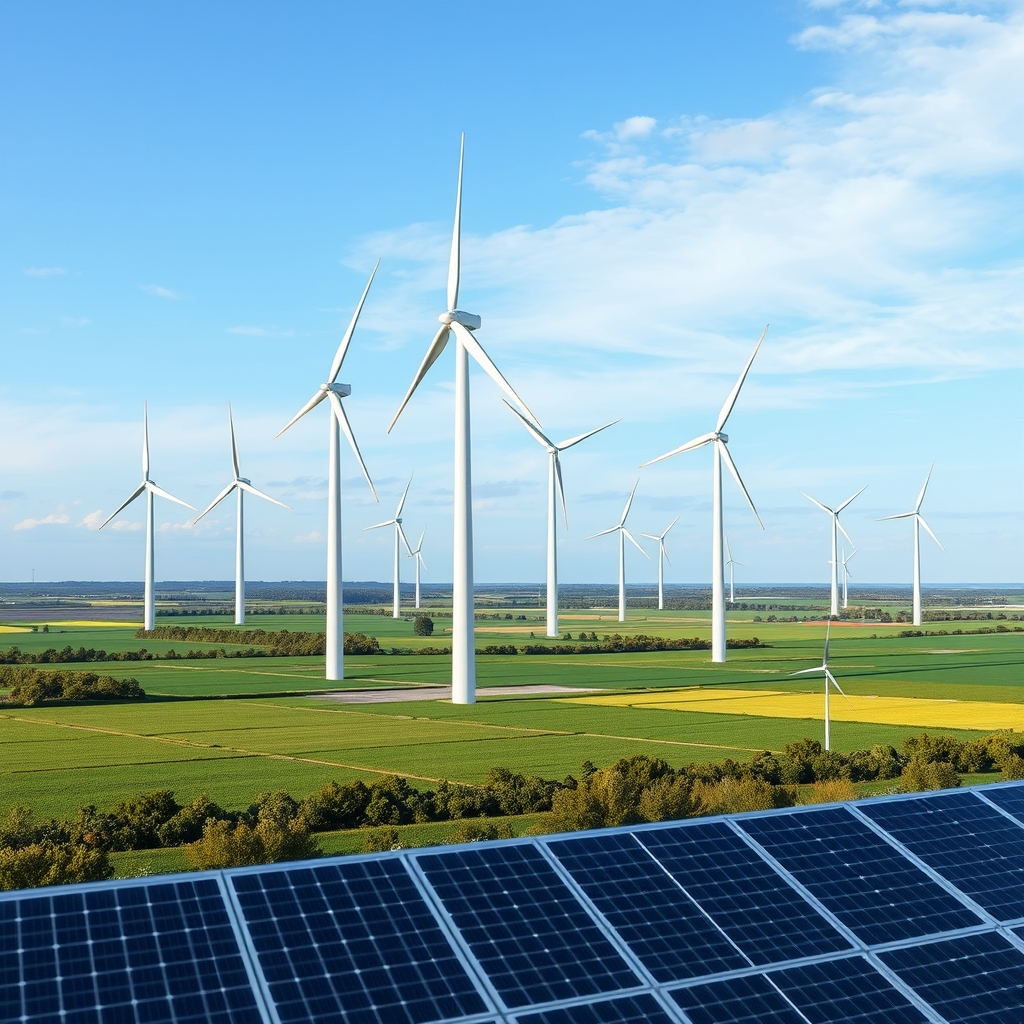
The government has announced a roadmap to increase the share of renewable energy generation to approximately 76 GW by 2030, and solar and wind power are currently expanding rapidly. In particular, solar power plants are being installed throughout the country, primarily near farmland and abandoned railway lines, while new offshore wind power projects are underway along the coasts of the East Sea and West Sea. These achievements contribute to South Korea's energy democratization goals and its efforts to reduce carbon emissions.
However, the expansion of renewable energy still faces limitations. First, solar and wind power are weather-dependent, resulting in fluctuating generation levels. The amount of electricity generated varies depending on solar radiation or wind speed, posing challenges to grid stability and reliable demand response. Additionally, large-scale power plant construction can lead to land use conflicts or opposition from local residents. For example, in some areas, there are concerns that solar installations may reduce agricultural productivity. These issues can slow down the pace of renewable energy expansion.
2. Re-evaluating the Role of Existing Power Plants
In this context, existing coal, gas, and nuclear power plants are often viewed solely as "sources of carbon emissions." However, if the energy transition is pursued only with short-term and absolute goals, it could threaten electricity supply stability and industrial competitiveness. Given South Korea's geopolitical situation and its high dependence on energy resources, the country needs to pursue a realistic transition without relying excessively on biofuels or hydrogen.
For example, South Korea's shortage of cobalt and lithium resources is a barrier to the expansion of electric vehicle batteries and energy storage systems. Therefore, it may be difficult to guarantee electricity supply stability solely through hydrogen energy or battery-based storage systems. In this case, a "hybrid power generation" approach, such as upgrading existing coal-fired power plants or converting them to gas-fired fuel, could be an option. This is an intermediate strategy that can reduce CO2 emissions while utilizing existing infrastructure.
For example, some coal-fired power plants in Gyeongbuk Province are piloting fuel substitution technologies. This process allows for the reduction of carbon emissions while utilizing existing power generation facilities and responding flexibly to changes in electricity demand. This approach reflects a transition concept that emphasizes "generational change" rather than complete closure. Furthermore, while it may be difficult to extend the operation of existing power plants from a legal and political perspective, it is important to recognize that careful consideration must be given to environmental and economic conditions.
3. Grid Flexibility and the Development of Storage Technologies
A key element for expanding renewable energy is not simply increasing production, but ensuring that this electricity can be supplied reliably through "grid integration." This requires the development of energy storage systems (ESS) and smart grid technologies. South Korea is currently using lithium-ion battery-based ESS to manage peak electricity demand, and some areas are operating fast-response power systems based on batteries.
Furthermore, while nuclear power generation is different in nature from renewable energy, it can still play a role as a high-capacity, low-carbon power source. Some nuclear power plant sites are exploring the potential of utilizing excess electricity by introducing converter systems linked to smart grids. In particular, South Korea aims to reduce coal-fired power generation gradually after 2030 while pursuing carbon emission reductions through the stable operation of existing nuclear power plants. This highlights the need to consider operating solutions for nuclear power plants based on safety and transparency, rather than advocating for their closure.
4. Aligning Policy and Market Mechanisms
This diversified approach will be difficult to achieve without strong policy support. The South Korean government has announced an "energy transition roadmap," but its structure, which prioritizes renewable energy, may have limitations in terms of sustainability. Therefore, the government is considering relaxing regulations on "extending the lifespan" and "converting the function" of power plants. For example, there are discussions about allowing the operation of some coal-fired power plants to continue after 2030 if they meet certain environmental standards.
Furthermore, market mechanisms should be used to enable a competitive coexistence between renewable energy and existing facilities. For example, rather than focusing on reducing the price of renewable energy through technical approaches in the electricity market, it may be necessary to assign a CO2 price to existing facilities to increase the economic viability of renewable energy. This can be achieved through a "carbon tax" or an "emissions trading system."
Ultimately, South Korea's energy transition requires a strategy that harmoniously integrates both renewable energy and existing facilities, rather than a "renewable energy vs. existing facilities" conflict. This approach should focus on long-term sustainability rather than short-term goals. The government, private sector, and research institutions must collaborate to recycle existing infrastructure and integrate new technologies, ushering in an era of "Energy Transition 2.0."
In conclusion, the energy transition requires a comprehensive transformation of legal, economic, and social structures, not just a simple technological change.
Popular posts
Why do solar panels last for over 20 years? Here are 5 key principles that support their durability and lifespan.
Five Key Considerations for the Transition to Renewable Energy.
Solar vs. Wind: What are the criteria for choosing the right energy source to meet Korea's electricity demand?
Comments 0