Solar vs. Wind: What are the criteria for choosing the right energy source to meet Korea's electricity demand?
In South Korea's transition to renewable energy, solar and wind power are two of the most crucial components. However, due to their different power generation characteristics and environmental conditions, it is essential to clearly determine which option is more suitable based on regional installation conditions and electricity demand patterns. While solar power offers greater flexibility in terms of stable power generation, space utilization, and seasonal characteristics, wind power may have an advantage in long-term electricity output. However, actual implementation is largely determined by geographical conditions and infrastructure.
Solar vs. Wind: Key Comparison Criteria
- Power Generation Stability
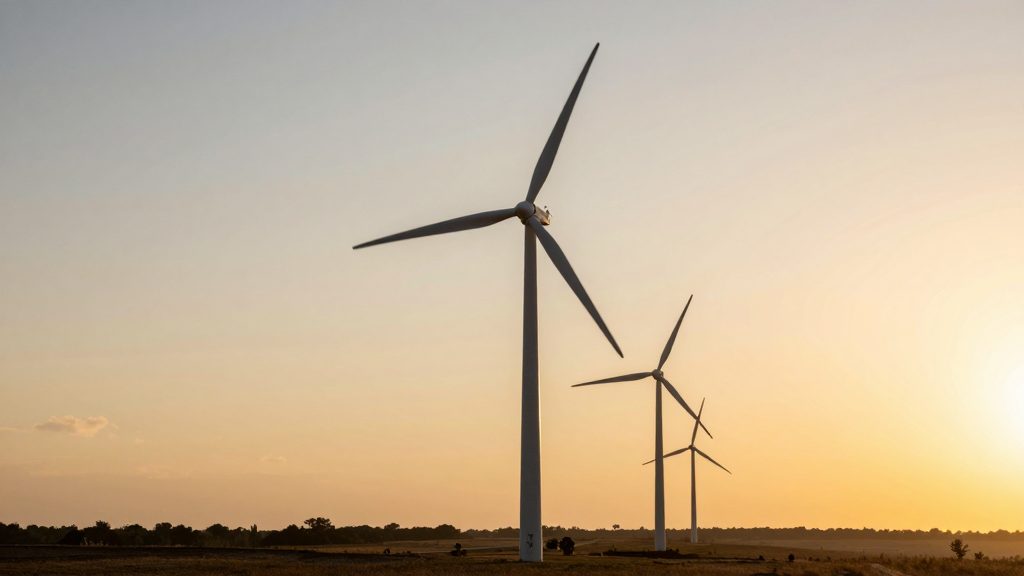
- Solar power generation fluctuates throughout the day depending on sunlight levels, and completely stops when the sun sets. However, it tends to peak between 10 AM and 4 PM, which often coincides with the midday electricity demand peak. In contrast, wind power can generate electricity even at night, and while wind speed changes, it provides a more balanced output on a weekly basis. Solar power relies on daily patterns with distinct peaks, while wind power has greater hourly variability but offers advantages in terms of consistency.
- Installation Space and Site Conditions
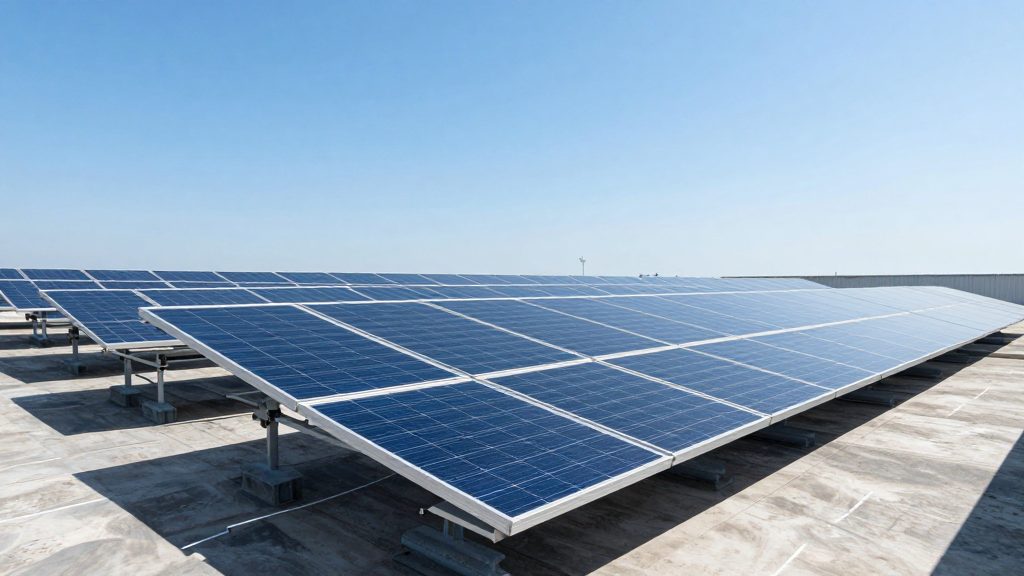
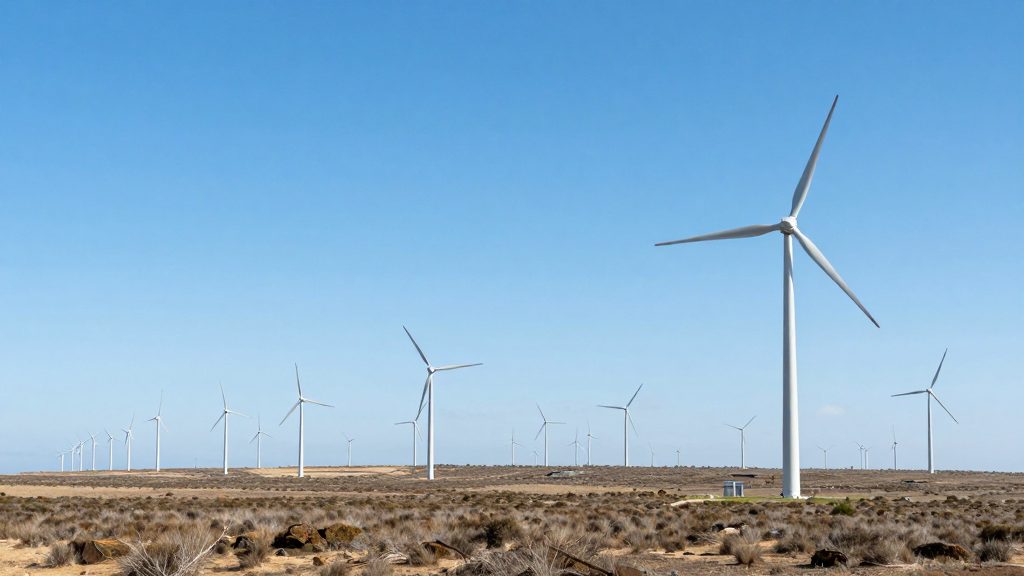
- Solar power has a high energy conversion efficiency and can be installed in various terrains, including rooftops, factory roofs, and mountainous areas. It is rapidly expanding in urban outskirts and industrial complexes. Wind power, on the other hand, is only efficient in coastal areas or open spaces where wind speeds are consistently high (typically above 5-6 m/s). Larger installations require relatively larger areas. Furthermore, noise and potential impacts on flight paths can lead to local opposition.
- Operation and Maintenance Characteristics
- Solar panels have a simple structure, and regular cleaning and monitoring are the primary maintenance tasks. Failure rates are low, and automated monitoring systems are common. Wind turbines, however, have many mechanical rotating parts, requiring complex maintenance processes such as gearbox management, blade lifespan monitoring, and corrosion prevention. Offshore wind turbines are particularly challenging to access for inspection, and replacement costs can increase significantly after 10 years or more of operation.
[Image: Solar vs. Wind: What are the energy selection criteria that best suit South Korea's electricity demand?]
- Integration with Power Infrastructure
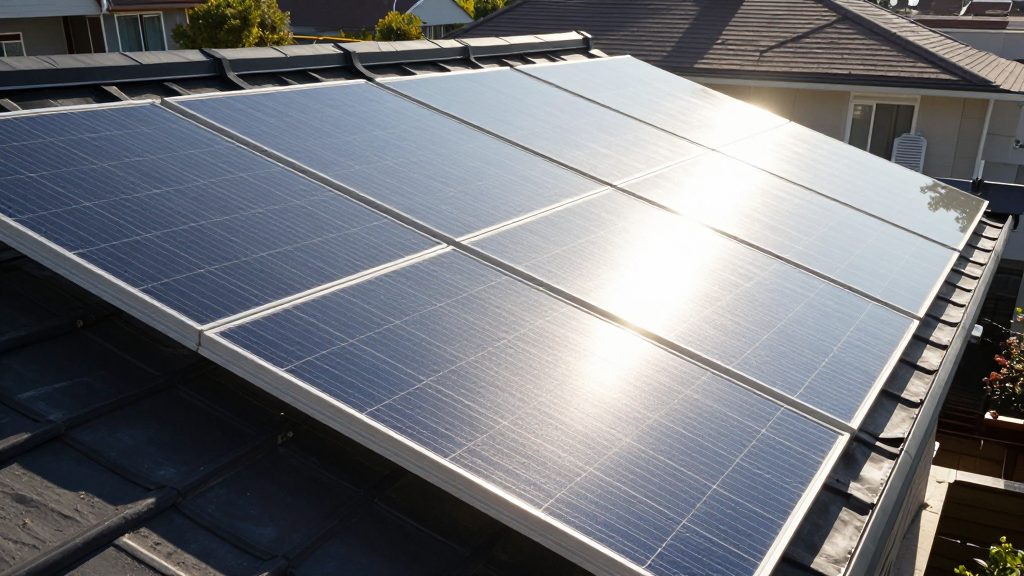
- Solar power is well-suited for distributed generation, making it easy to integrate with small-scale local grids (microgrids). Power self-sufficiency systems using solar power are becoming increasingly common in densely populated urban areas. Wind power, on the other hand, is typically operated as large-scale power plants and requires connection to the national grid via high-voltage lines. Therefore, wind power functions as a large-scale generation center in remote areas, and the availability of high-voltage transmission infrastructure is crucial to minimize power transmission losses.
[Image: Solar vs. Wind: What are the energy selection criteria that best suit South Korea's electricity demand?]
| Comparison Item | Solar | Wind |
|---|---|---|
| Daily Generation Pattern | Concentrated during daylight hours, peak at midday | Can generate electricity at night, large daily variation |
| Installation Space Requirements | Suitable for small to medium-sized sites (including rooftops) | Requires large open spaces or offshore areas |
| Maintenance Complexity | Low, primarily cleaning | High, regular inspection of mechanical components required |
| Ease of Integration with Power Grid | Well-suited for local, small-scale infrastructure | Primarily for large-scale power grids, high-voltage lines essential |
Recommendations
[Image: Solar vs. Wind: What are the energy selection criteria that best suit South Korea's electricity demand?]
- Homeowners or factory operators in urban areas: Solar power is easy to install on rooftops or within the site, and its peak generation often coincides with midday electricity demand, resulting in a high self-consumption rate and significant cost savings. In areas where renewable energy subsidies are continuously available, the initial investment can be recovered more quickly.
[Image: Solar vs. Wind: What are the energy selection criteria that best suit South Korea's electricity demand?]
- Businesses located in coastal areas or open mountainous regions: Wind power can provide a stable and long-term electricity output in areas with consistent wind speeds, making it suitable for large-scale industrial power self-sufficiency. In particular, linking with the government's "Regional Energy Self-Sufficiency Project" can provide significant subsidy benefits.
- Policy planners considering both power stability and sustainability: A hybrid system that combines both technologies is recommended. Solar power can operate during the day, while wind power can supplement it during nighttime and periods of strong winter winds, effectively reducing overall grid variability.
Overall Assessment
Solar and wind power are complementary technologies in South Korea's energy transition. Relying on a single technology alone is insufficient to meet electricity demand. Therefore, a "harmonious design" that prioritizes solar power based on regional characteristics and infrastructure conditions, while utilizing wind power as a supplementary resource in windy areas, is the most practical solution.
Related posts
Why do solar panels last for over 20 years? Here are 5 key principles that support their durability and lifespan.
Five Key Considerations for the Transition to Renewable Energy.
Solar-powered auxiliary batteries: Why are they now a necessity?
Wind vs. Solar: Which is the "growth model" for South Korea's renewable energy transition?
Popular posts
Why do solar panels last for over 20 years? Here are 5 key principles that support their durability and lifespan.
Five Key Considerations for the Transition to Renewable Energy.
Solar-powered auxiliary batteries: Why are they now a necessity?
Comments 0