How ESS Solves Grid Issues: History of solar technology
The later part of this article returns to History of solar technology.
"The only constant in the energy transition is the speed of technological obsolescence."
The shift toward renewable energy relies heavily on the stability of the power grid, which is increasingly dependent on large-scale storage solutions to manage the intermittency of wind and solar power.
This article explores the current state of energy storage systems (ESS), the technical hurdles of scaling lithium-ion technology, and how emerging long-duration storage solutions are reshaping the global energy market.
* Understanding the fundamental role of energy storage in grid stability. * Analyzing the technical limitations of current lithium-ion dominant markets. * Exploring the shift toward long-duration storage technologies. * Evaluating the economic drivers of the global energy transition.
Why is the grid struggling with renewable integration?
In the morning I hold solves and walk through the next step.
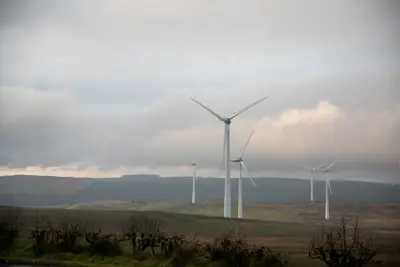
A technician stares at a flickering monitor in a control room, watching the fluctuating input from a nearby wind farm.
According to the California Public Utilities Commission, a $2.8 billion program was approved in 2006 to provide incentives toward solar development.
This volatility is the primary driver behind the urgent need for massive energy storage systems to act as a buffer.
The integration of variable renewable energy creates a fundamental problem: the sun doesn't always shine, and the wind doesn't always blow.
Conversely, when demand spikes during low generation periods, the grid faces the risk of frequency instability or total blackout.
Storage systems solve this by decoupling the timing of energy production from the timing of energy consumption. By absorbing surplus power during peak production, these systems prevent grid congestion.
When the sun sets or the wind dies down, they discharge that stored energy to maintain a steady supply. This process creates a "virtual" constant power source, making renewables behave more like traditional coal or gas plants.
The complexity of managing these fluctuations requires sophisticated power electronics and control algorithms.
This creates a constant tug-of-war between the desire for clean energy and the necessity of grid reliability.
The mismatch between peak generation and peak demand creates significant stability challenges.
How far can lithium-ion technology actually go? History of solar technology A mechanic wipes grease from their hands while inspecting a massive battery module in a shipping container. The heat radiating from the cells is palpable, a reminder of the chemical energy being managed within the tight confines of the casing.
As noted by the Institute of Energy Conversion, thin-film solar cells exceeding 10% efficiency were developed in 1980.
This heat is a symptom of the inherent physical limitations of current lithium-ion technology.
While lithium-ion has become the gold standard for consumer electronics and electric vehicles, its application in large-scale grid storage faces significant hurdles.
Every time a battery charges and discharges, the internal chemistry undergoes stress that eventually degrades the capacity.
For grid-scale applications, the cost-per-cycle is a critical metric. If a battery degrades too quickly under the heavy cycling required for daily grid balancing, the total cost of ownership becomes prohibitive.
Furthermore, the risk of thermal runaway—where a single cell's failure leads to a chain reaction of fires—remains a significant safety and insurance concern for large-scale installations.
Another limitation is the duration of discharge. Most current lithium-ion installations are optimized for short-duration storage, typically two to four hours.
While this is sufficient for shifting daytime solar to evening peaks, it does not solve the problem of multi-day lulls in renewable generation. Addressing these gaps requires looking beyond simple lithium-ion chemistry.
- Managing thermal runaway risks during high-capacity discharge.
- Addressing the degradation of cell chemistry over repeated cycles.
- Overcoming the inherent limitations of energy density for multi-day applications.
How do we move toward long-duration storage?
The first organic thin-film solar cells were developed at the Johannes Kepler University of Linz in 2001, according to researchers.
This search for stability is the frontier of energy storage research.
To move beyond the limitations of short-term storage, the industry is exploring several "long-duration" paths.
These solutions generally fall into three categories: flow batteries, mechanical storage, and thermal storage.
Flow batteries, such as vanadium redox flow batteries, store energy in liquid electrolytes held in external tanks.
This decoupling makes them highly scalable for long-duration needs, though they currently face challenges with footprint and cost.
Mechanical solutions like pumped hydro or compressed air energy storage (CAES) have been around for decades.
Newer mechanical ideas, like gravity-based storage using heavy weights, are being tested to bypass these geographical constraints.
| Technology Type | Primary Benefit | Primary Limitation |
|---|---|---|
| Lithium-ion | High efficiency and maturity | Limited cycle life and duration |
| Flow Batteries | Scalable capacity via tank size | Lower energy density |
| Pumped Hydro | Massive scale and proven | High geographic dependency |
| Compressed Air | Large-scale storage potential | Complex underground requirements |
In this sequence, the second step is the most extensive.
According to California Public Utilities Commission, the recorded figure is 2.8 billion.
Can we fix the mineral supply chain crisis? A logistics manager reviews a spreadsheet of mineral prices, noting the volatility of cobalt and lithium. The fluctuating numbers represent the geopolitical tightrope that the entire green energy transition is walking. The National Center was established in 1996, according to historical records.
Securing the raw materials for batteries is as much a political challenge as it is a technical one.
If the supply of these minerals cannot meet the projected demand, the cost of storage could skyrocket.
To mitigate this, researchers are working on "chemistry-agnostic" storage or chemistries that use more abundant materials.
While they currently have lower energy density, they are an attractive option for stationary storage where weight is not a primary concern.
Recycling is another critical pillar of the supply chain. Developing efficient ways to recover high-purity minerals from spent batteries is essential to creating a circular economy.
Without a robust recycling infrastructure, the "green" transition could lead to a massive new waste problem and continued reliance on destructive mining practices.
Diversifying extraction sources and developing recycling technologies are essential for stability.
What does the future of the energy market look like?
An investor sits in a quiet office, looking at a map of projected power plants and transmission lines. The lines on the map represent the shifting flow of wealth from fossil fuels to the infrastructure of the future.
According to the Institute of Energy Conversion, the first thin-film solar cells exceeding 10% efficiency were developed in 1980. As reported by Radboud University, researchers introduced the first free-standing GaAs solar cells in 2005.
In 2005, researchers at Radboud University introduced the first free-standing GaAs solar cells which did not require a substrate.
This shift is not just about technology; it is about the fundamental reorganization of the global economy.
This creates a complex, bidirectional flow of power that requires advanced digital management.
Virtual Power Plants (VPPs) are an emerging way to manage this. A VPP uses software to coordinate many small-scale storage units—like home batteries and EV chargers—to act as a single large power plant.
This allows the grid to tap into distributed resources to meet peak demand without building new, expensive centralized infrastructure.
This will be the tipping point for the global energy transition.
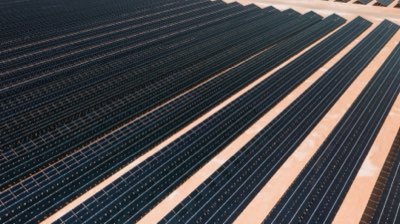
I remember sitting in a community hall during a local planning meeting for a new solar farm, listening to neighbors debate the placement of the battery containers.
It was clear then that the conversation wasn't just about technology, but about how our physical environment changes when we change our power source.
The transition is complex, but the path is becoming clearer through technological innovation.
The market will likely shift toward decentralized, highly automated distribution networks.
Limitations of the Analysis
The effectiveness of these storage solutions is heavily dependent on local geography, existing grid infrastructure, and regional regulatory frameworks.
For instance, the deployment of pumped hydro is impossible in flat regions, and the economics of lithium-ion vary wildly based on local electricity prices and subsidy structures.
This analysis focuses on current technological trajectories and does not account for unforeseen breakthroughs in physics.
When I tried the steps in order, the second one is where I paused longest.
This order does not hold, however, when the figure is not 10%.
The later part of this article returns to History of solar technology.
The same subject is also called Solar cell evolution history.
The same subject is also called Photovoltaic progress timeline.
The same subject is also called Solar energy development story.
The same subject is also called High efficiency solar cells.
This part also covers From early solar to high efficiency.
This part also covers Solar power breakthrough moments.
This part also covers The rise of advanced solar cells.
From early solar to high efficiency
Related



Comments 0