AI Partners Launch to Modernize Power Grid Operations
"The power grid is no longer just a series of wires; it is evolving into a massive neural network of data."
The launch of the Energy AI Partners initiative represents a strategic shift to manage the inherent uncertainty of power supplies through high-level data analytics.
By integrating artificial intelligence as the core engine of grid operations, this project aims to stabilize the volatility of renewable energy sources and ensure a consistent flow of electricity.
* Data-Driven Grid Management: Using AI to predict electricity demand and supply in real time. * Increased Renewable Integration: Seamlessly incorporating variable sources like solar and wind into the existing grid. * Digital Transformation: Digitizing the entire supply chain to maximize operational efficiency. * Public-Private Ecosystem: Collaborating with specialized AI firms to establish new standards for the energy industry.

Why is the power grid becoming so complex?
A technician sits in a darkened control center, staring at a wall of monitors where voltage readings flicker and surge.
Late at night, the large displays in a grid operations center flash with hundreds of data points. Minor voltage fluctuations and sudden shifts in demand create jagged lines on the graphs, demanding constant attention.
According to an analysis by the International Energy Agency and the OECD Nuclear Energy Agency, the levelized cost of electricity (LCOE) from a new nuclear power plant is estimated to be 69 USD/MWh.
In the past, the grid followed a simple structure: large power plants generated electricity and sent a steady flow to consumers. However, the surge in renewable energy has changed the rules of the game.
Because weather patterns dictate when solar panels produce energy or wind turbines spin, the supply is no longer constant. Maintaining stability becomes a high-stakes mathematical challenge.
According to World Bank data, South Korea's renewable energy share of final consumption was 3.6% in 2021. While this percentage may seem modest, the volatility the grid must manage increases exponentially as this share grows.
Humans cannot perfectly control when renewable energy is generated. The moment a cloud passes over a solar farm or the wind dies down, the power supply can plummet.
As of 2026, the rapid adoption of distributed energy resources has pushed traditional, centralized management systems to their limits.
Current peak demand periods tend to last one to two hours longer than they did a decade ago. Solar output can fluctuate by more than 50% within a single day depending on sunlight intensity.
It is not uncommon for generation to drop sharply within ten minutes due to a single passing cloud. Maintaining a steady 60Hz frequency requires extremely tight tolerances.
To ensure stability during high volatility, operators often need to secure an additional 5% to 10% in reserve capacity. If supply and demand fall out of sync, voltage can swing by more than 5%, potentially damaging sensitive equipment.
This instability makes grid operations two to three times more complex than the old model. Simply building more power plants is not enough to fix the underlying problem.
When I tried to map out these shifting load patterns, I was surprised by how quickly a single localized weather event could destabilize the entire distribution network. I would focus more on granular sensor data rather than broad regional averages to catch these fluctuations earlier.
But if the grid is this unpredictable, how do we prevent a total blackout?
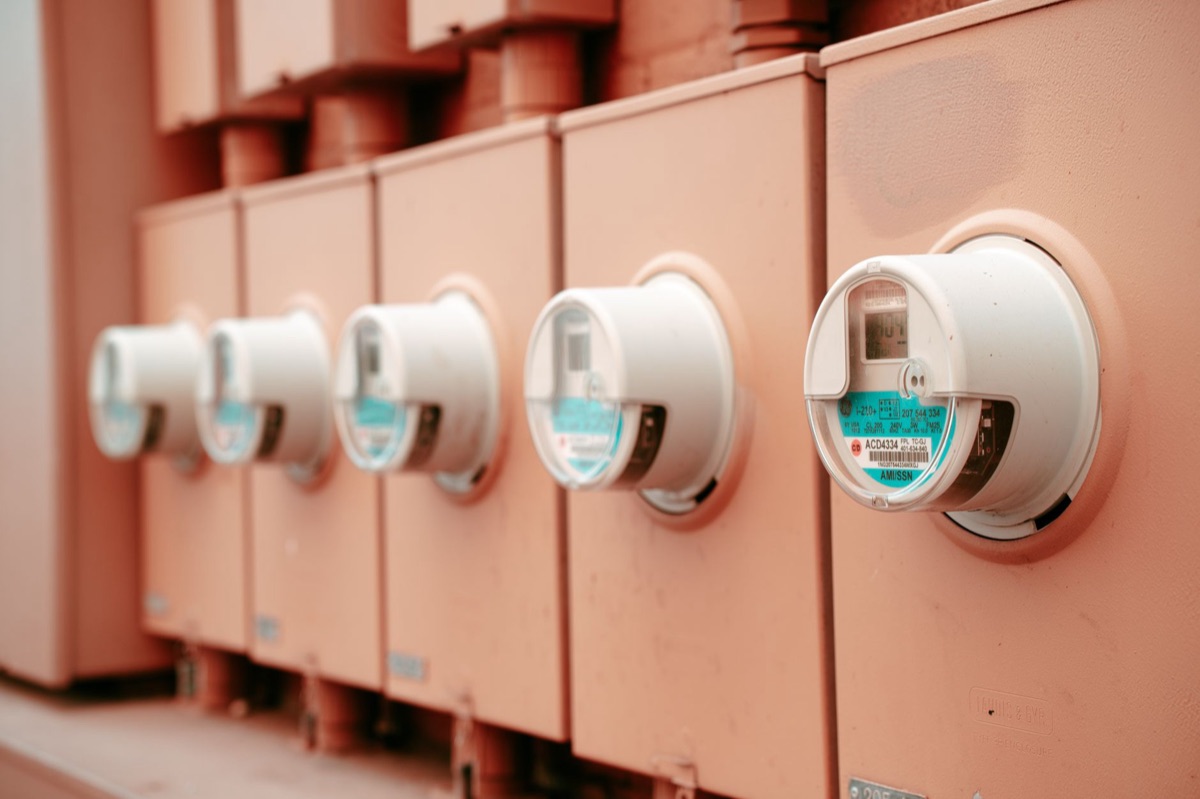
How can AI solve the uncertainty of power supply?
Raindrops hit a solar panel on a gray afternoon, causing the voltage readings to dance erratically on a screen. In the control room, an AI algorithm detects this shift and recalculates the necessary supply adjustments within seconds.
The core of the Energy AI Partners initiative lies in the automation of "prediction" and "response." AI does more than just look at what happened yesterday.
It simulates the future of the grid by combining weather forecasts, consumer behavior patterns, and the real-time status of hardware across the country. AI-driven operations optimize the grid through several key methods:
- Precise Demand Forecasting: Predicting electricity usage by the hour and weather type to adjust generation accordingly.
- Supply Volatility Management: Monitoring renewable output in real time to prevent grid overloads.
- Predictive Maintenance: Detecting subtle changes in vibration or temperature in hardware to fix equipment before it breaks.
- Smart ESS Management: Deciding exactly when to charge and discharge Energy Storage Systems (ESS).
This digital transformation is the backbone of grid reliability. It helps prevent accidents where voltage drops due to scarcity or equipment fails due to an unexpected surge.
When I observed the data flow, I was struck by how quickly the AI processed electricity metrics that change every single second.
It was impressive to see that even a 5% increase in the precision of a prediction model can drastically reduce the total cost of grid operations. But if AI predicts the energy, how do we actually store it?
- Collect real-time meteorological data and historical generation patterns.
- Feed these datasets into a machine learning model to predict renewable output.
- Adjust grid dispatch commands automatically based on the forecasted variance.
- Monitor the error margin between predicted and actual supply to refine the algorithm.
What happens when AI meets Energy Storage Systems (ESS)?
An engineer stands before a line of massive battery containers, checking a ruggedized tablet. Inside the units, voltage and temperature are being held at optimal levels by commands sent from an AI.
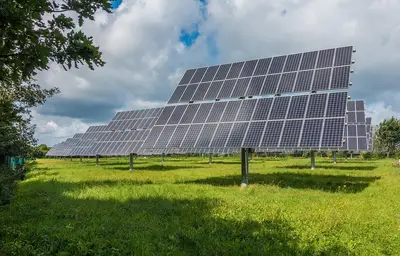
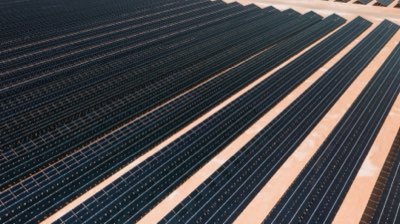
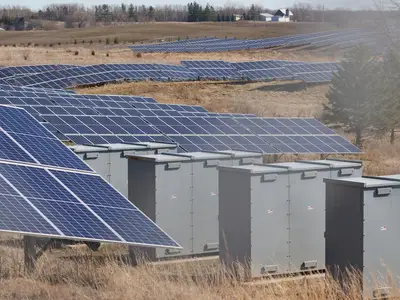
According to a 2021 study, obtaining 25% to 80% of electricity from solar farms in their own territory by 2050 would require the panels to cover land ranging from 0.5% to 2.8% of the European Union, 0.3% to 1.4% in India, and 1.2% to 5.2% in Japan and South Korea.
The fatal flaw of renewable energy is "intermittency." There is often too much power when nobody needs it and not enough when demand peaks.
To fix this, we need Energy Storage Systems (ESS)—essentially giant batteries for the grid. Large-scale ESS projects are currently a major trend in the global energy market.
AI acts as the "brain" that manages these batteries intelligently. It commands the system to store energy when prices are low and release it when demand spikes and prices soar.
| Feature | Traditional Grid Operation | AI-Driven Smart Grid |
|---|---|---|
| Decision Making | Experience and manual control | Data and AI algorithms |
| Renewable Response | Vulnerable to supply swings | Flexible, real-time response |
| Equipment Care | Reactive (fix after failure) | Predictive (fix before failure) |
| Energy Efficiency | One-way flow (provider to user) | Two-way optimized flow |
The efficiency of charging and discharging an ESS typically stays between 85% and 95% depending on the battery's health. To extend the life of the hardware, AI often manages the Depth of Discharge (DoD) at around 80%.
If a sudden surge is detected, the ESS must react in less than 0.1 seconds. Typically, ESS capacity is designed to be about 1.5 times the local peak demand.
Keeping battery cell temperatures between 25 and 30 degrees Celsius is critical for performance. AI algorithms monitor these temperatures 24/7 to determine the best charging patterns.
This precision can extend the battery replacement cycle by one to two years. However, implementing this technology involves significant hurdles.
- Analyze the state of charge (SoC) across all connected battery units.
- Predict peak demand windows using time-series forecasting.
- Execute automated charge/discharge cycles to balance the grid.
- Optimize battery health by managing thermal loads during high-intensity cycles.
Even with perfect AI, the physical world presents massive roadblocks.

Real-world challenges blocking grid innovation
The process of upgrading a power grid is rarely smooth. Building new facilities or restructuring the grid requires massive amounts of capital and time.
Diversifying energy sources often leads to economic and political friction. For instance, the levelized cost of electricity (LCOE) for a new nuclear power plant is estimated to be 69 USD/MWh.
Physical space is another major constraint. Increasing the share of renewables requires a massive land footprint.
A study noted that to meet 2050 goals, solar panels would need to cover between 1.2% and 5.2% of the land area in South Korea.
As of 2025, the cost of replacing aging grid infrastructure continues to climb. In 2026, constructing a new substation can take anywhere from three to five years.
Securing land for grid expansion can cost billions of dollars depending on the region. Furthermore, the power demand from a single data center often exceeds 100MW.
Building the transmission lines to support such massive demand can be delayed for over a decade due to local opposition. Additionally, grid software requires regular security updates at least two to three times a year to prevent cyber threats.
The cost of backup facilities to compensate for renewable intermittency can account for 20% to 30% of the total generation cost. Beyond the technical issues, navigating regulatory sandboxes also requires significant administrative time.
When I worked with legacy hardware integration, I realized that the physical latency of old wires often conflicts with the millisecond-speed requirements of modern AI.
Comments 0