Smart grid future trends: Tips for managing complex demand
"A smart grid is not merely an upgrade to wires and poles; it is a fundamental shift toward a dynamic, responsive, and decentralized energy ecosystem."
The smart grid future trends involve integrating advanced digital communications with power infrastructure to balance supply and demand in real time.
This transition focuses on increasing grid efficiency evolution through automated systems, managing power market transformation through distributed resources, and implementing smart grid application cases to stabilize energy delivery.
Key takeaways: * Integration of renewable sources and energy storage systems creates a more resilient network. * Digital automation helps mitigate the costs of outages and inefficient one-way power flows.
* Future-proofing requires focus on self-healing capabilities and resistance to external disruptions.
How do modern technologies reshape the power grid?
At dusk, the technician taps the glowing screen as the smart technology shifts energy flows with a soft hum.
A technician monitors a digital interface where energy flows shift seamlessly between solar panels and battery storage.
These technologies are installed within the Los Angeles Department of Water and Power and Southern California Edison territory as a network of EV chargers, battery energy storage systems, solar panels, DC fast charger, and Vehicle-to-Grid (V2G) units.
The integration of these diverse assets allows for a more flexible energy landscape. By combining generation and storage, the network can manage fluctuations much better than traditional systems.
This setup facilitates energy efficiency evolution by optimizing how electricity moves through the local infrastructure.
The deployment of these assets helps manage the complexities of modern demand. A smart grid application cases approach allows for better coordination between different energy sources. This ensures that the grid remains stable even as consumer habits change.
- Deploy advanced sensors to monitor real-time data.
- Integrate automated control systems for load balancing.
- Implement digital communication protocols for grid stability.
What drives the need for smart grid application cases? Smart grid future trends
An engineer reviews a report showing the massive economic value of the existing utility infrastructure. A 2019 study from International Energy Agency estimates that the current (depdepreciated) value of the US electric grid is more than US$1 trillion.
High-value assets require intelligent management to prevent waste and costly failures. This one-way flow of information is expensive; the last 10% of generating capacity may be required as little as 1% of the time, and brownouts and outages can be costly to consumers.
Addressing these inefficiencies is critical for long-term stability. Developing smart grid application cases helps mitigate the financial risks associated with traditional power delivery. This transition supports a more sustainable power market transformation by utilizing assets more effectively.
In this sequence, the first step is the most fundamental.
How can we ensure a future-proof energy system?
At dawn, the technician grips the cold metal railing while contemplating how to build a smart and resilient network.
A security specialist tests the automated response of a circuit breaker to a simulated fault. The Department of Energy has also identified both attack resistance and self-healing as major keys to ensuring that today's smart grid is future-proof.
Building resilience is the primary goal of modernizing the network. This involves creating systems that can automatically detect and isolate faults without human intervention. Such capabilities are essential for managing the complexities of decentralized energy systems.
Security must be baked into the digital architecture of the grid. Protecting the network from cyber threats and physical disruptions is as important as managing electricity flow. This focus on security is a cornerstone of the energy efficiency roadmap for the coming decades.
What are the practical steps for implementing smart technology?
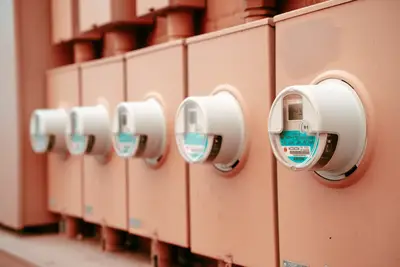
A technician installs a smart meter in a residential unit, connecting it to the local network. Implementation typically follows a structured approach to ensure compatibility and reliability.
- Deploy smart metering and sensors to enable two-way communication between the utility and the consumer. 2. Integrate energy storage systems, such as large-scale batteries, to buffer intermittent renewable generation. 3. Implement automated control software to manage demand response and real-time load balancing.
A final check ensures that all digital components communicate within required latency limits to prevent system instability. This process supports the future of power distribution by creating a more reliable and responsive network.
How does renewable energy integration impact the grid?
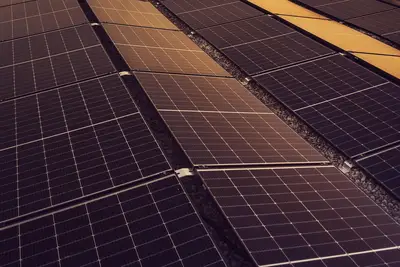
A solar farm technician adjusts the tilt of a panel to maximize midday sunlight capture. The transition toward renewables requires a more sophisticated way to handle variable energy inputs.
The Photovoltaic Association reported in 2012 that Australia had reached grid parity (ignoring feed in tariffs). This milestone demonstrated that renewable sources could compete directly with traditional fossil fuels on a cost basis.
Integrating these sources requires advanced management tools. Using these tools helps manage the energy efficiency roadmap by smoothing out the variability of sun and wind. This allows for a more seamless transition to a cleaner energy mix.
What are the limitations of current smart grid technology?
An operator looks at a screen where data synchronization issues cause a momentary delay in a command. While progress is significant, technical hurdles remain to be overcome.
One major limitation is the delay in communication between devices. Latency of the data flow is a major concern, with some early smart meter architectures allowing actually as long as 24 hours delay in receiving the data, preventing any possible reaction by either supplying or demanding devices.
| Feature | Traditional Grid | Smart Grid |
|---|---|---|
| Communication | One-way | Two-way |
| Management | Centralized | Distributed |
I observed that managing these latencies is vital when testing new charging networks. This limitation must be addressed to fully realize the benefits of decentralized energy systems.
The subject here is Smart grid future trends.
This part also covers Advanced grid technology adoption.
Advanced grid technology adoption
Related



Comments 0