ESS future development: Why storage is essential for grid
"The transition to renewable energy requires more than just generation; it requires the ability to hold that power for when the sun sets or the wind stops."
The future of energy storage technology involves scaling capacity and improving efficiency to balance the grid as variable renewable energy shares increase.
This guide explores the development of ESS technology, its role in grid stability, and the infrastructure needs required for a sustainable energy mix.
How will ESS technology evolve to meet growing demand?
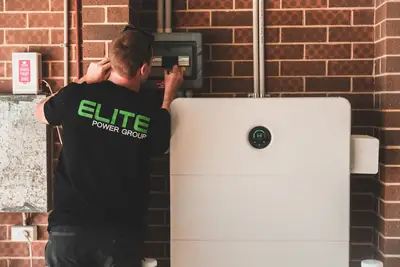
A technician adjusts a high-voltage connection in a quiet laboratory, preparing for a capacity test. To meet rising needs, the industry is moving toward massive scale and specialized research facilities.
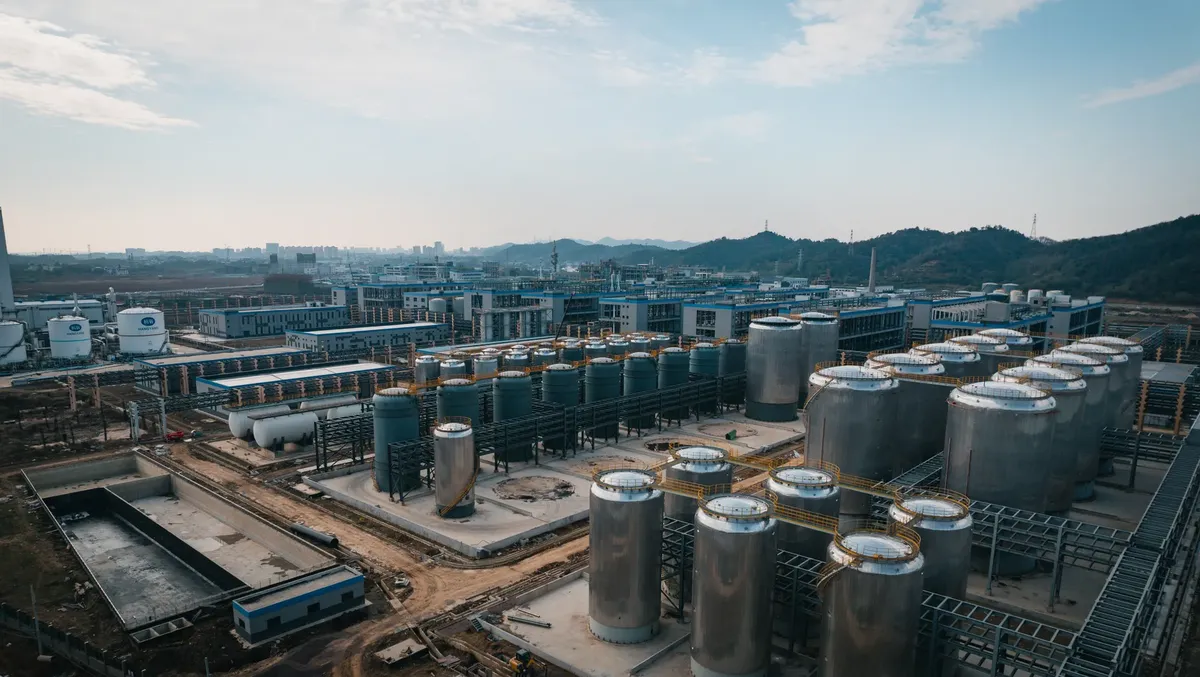
The development of new storage solutions is happening through significant infrastructure investments.
For instance, the State of New York unveiled its New York Battery and Energy Storage Technology (NY-BEST) Test and Commercialization Center at Eastman Business Park in Rochester, New York, at a cost of $23 million for its almost 1,700 m2 laboratory.
This type of facility provides the environment necessary for testing advanced chemical and mechanical storage systems.
Future-oriented research is also exploring molecular-level solutions. From 2023 onwards, a new project by the German Research Foundation focuses on molecular photoswitches to store solar thermal energy.
Such innovations aim to diversify the ways we capture and hold energy, moving beyond traditional lithium-ion constraints.
- Scaling up manufacturing capacity for battery cells.
- Integrating advanced software for real-time load management.
- Developing hybrid systems that combine multiple storage chemistries.
Why is ESS technology essential for grid stability? ESS future development
An engineer monitors a digital dashboard as a sudden surge in wind power hits the local substation. Maintaining a steady frequency requires rapid response times to prevent outages.
The primary driver for ESS technology is the need to mitigate the variability of renewable sources. In grid models with high VRE share, the excessive cost of storage tends to dominate the costs of the whole grid.
For example, in California alone, an 80% share of VRE would require 9.6 TWh of storage, while a 100% share would require 36.3 TWh.
Reliable energy storage trends suggest that these systems must act as a buffer. Studies suggest energy can begin to released with as little as 1 second warning, making the method a useful supplemental feed into an electricity grid to balance load surges.

This rapid response capability is vital for maintaining frequency and voltage stability as traditional spinning mass from coal or gas plants is phased out.
In this sequence, the second point is the most critical.
What are the infrastructure needs for a renewable-heavy grid?
A worker inspects a massive underground storage unit during a routine maintenance check. Building a resilient grid requires a complete rethink of how power is moved and stored across vast distances.
Transitioning to a renewable-heavy grid requires massive physical and digital upgrades.
According to another study, supplying 80% of US demand from VRE would require a smart grid covering the whole country or battery storage capable to supply the whole system for 12 hours, both at cost estimated at $2.5 trillion.
The scale of this infrastructure challenge is significant. While localized storage helps, a robust grid stability ESS strategy requires long-duration solutions to handle seasonal or multi-day weather patterns.
Integrating these systems into existing transmission lines and managing the decentralized nature of solar and wind requires a sophisticated, interconnected network.
How does ESS role in energy mix compare to traditional power?
A technician compares the discharge rates of two different battery prototypes on a workbench. Engineers must balance cost, duration, and efficiency when choosing the right technology for specific applications.
When evaluating the ESS role in energy mix, the comparison between different storage types becomes clear. For example, Pumped Storage Hydropower (PSH) energy efficiency varies in practice between 70% and 80%, with claims of up to 87%.
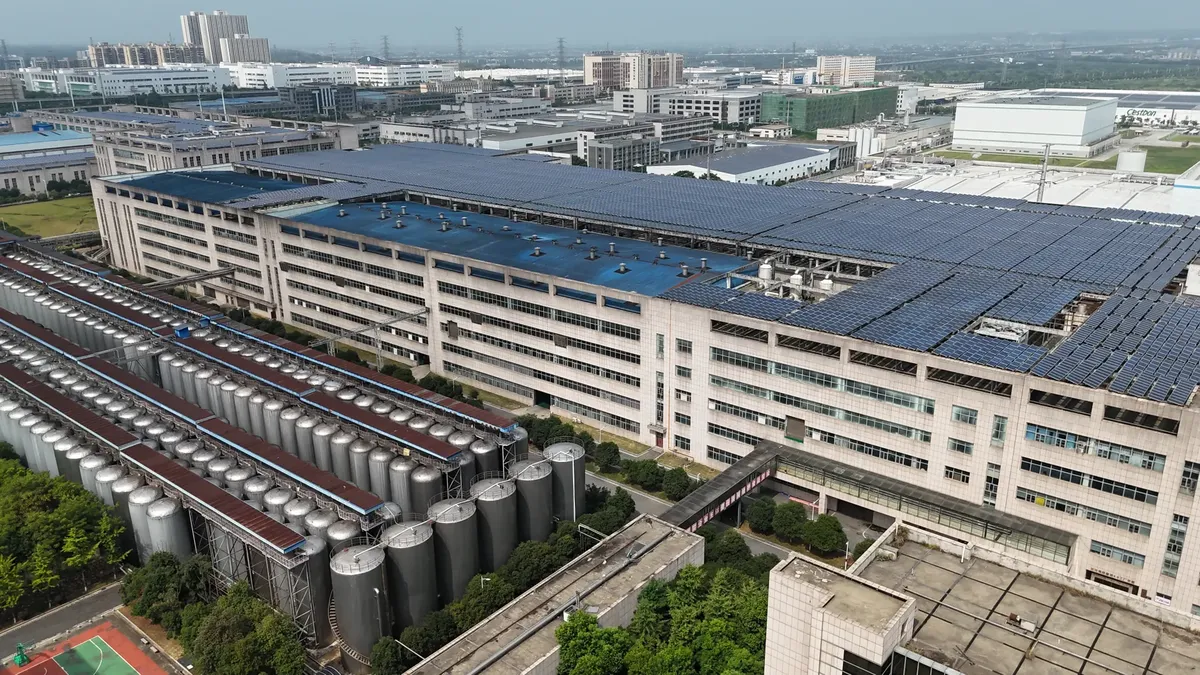
This compares to other technologies that might offer faster response but shorter durations.
The economic reality of the transition is also a factor. Several studies have found that relying only on VRE and energy storage would cost about 30–50% more than a comparable system that combines VRE with nuclear plants or plants with carbon capture and storage instead of energy storage.
This suggests that the future mix may include a combination of diverse generation and storage technologies to remain cost-effective.
What are the specific methods for thermal and mechanical storage?
A technician monitors the temperature of a thermal storage tank in a facility. Beyond chemical batteries, mechanical and thermal methods offer unique advantages for different grid needs.
According to the German Research Foundation, a new project focusing on molecular photoswitches to store solar thermal energy begins from 2023 onwards.
Different storage methods offer varying levels of efficiency and application.
This represents a push toward much larger-scale mechanical solutions.
Thermal solutions also provide distinct benefits for heating and cooling. An example is the Drake Landing Solar Community in Canada, for which 97% of the year-round heat is provided by solar-thermal collectors on garage roofs, enabled by a borehole thermal energy store (BTES).
| Technology Type | Feature/Capacity |
|---|---|
| Carnot Battery | 1,000 MWh storage capacity |
| PSH Efficiency | 70% to 80% |
I observed that the scale of these projects often dictates their specific use case, from residential to utility-scale.
How can we ensure long-term reliability?
An operator checks the integrity of a storage vessel to ensure it meets safety standards. Ensuring reliability involves testing new chemistries and mechanical systems under real-world conditions.

To achieve long-term reliability, the industry must follow structured development paths: 1. Validate new chemistries in specialized testing centers to ensure safety and cycle life. 2. Scale mechanical systems, such as large-scale batteries, to meet utility-level demands. 3.
Integrate smart grid controls to manage rapid-response energy release during load surges.
A final check of these systems ensures they can handle the stresses of variable input. One limitation is that the cost of storage in high-VRE scenarios remains a dominant factor in total grid expenditure.
The subject here is ESS future development.
The same subject is also called ESS infrastructure needs.
The same subject is also called Renewable energy storage.
This part also covers Advanced energy storage tech.
This part also covers Future power grid strategy.
Related



Comments 0